


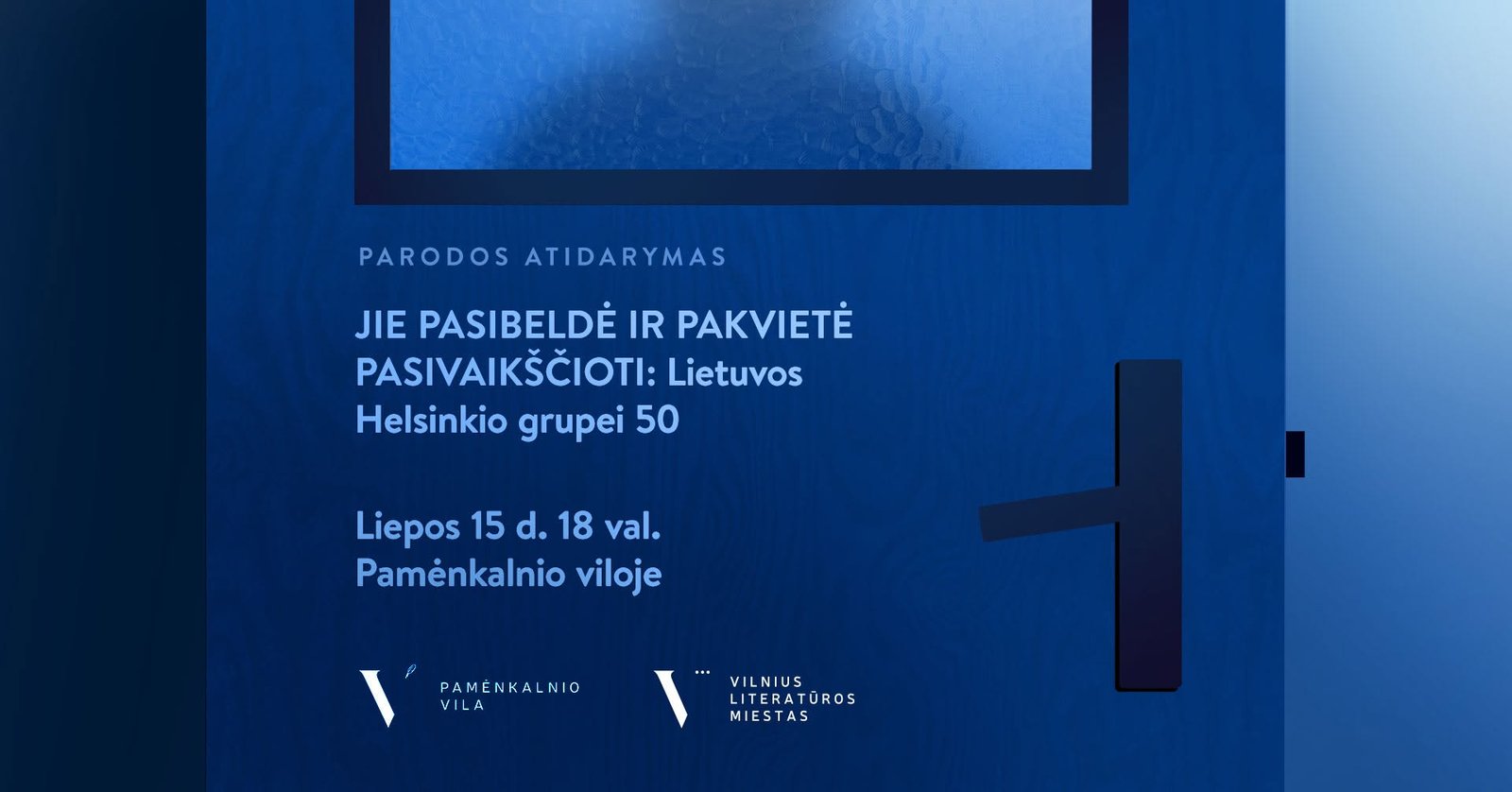
Pamėnkalnis Villa (Pamėnkalnio g. 34, Vilnius), a branch of the Vilnius UNESCO City of Literature, invites residents and visitors to the exhibition They Knocked and Invited Us for a Walk: 50 Years of the Lithuanian Helsinki Group. The villa also presents updated display spaces detailing the complex history of the building and its residents between 1938 and 1971. The exhibition will run at the Pamėnkalnis Villa until the end of 2027.
“With the opening of the ground-floor display space and the Helsinki Group exhibition, the entire Pamėnkalnis Villa is now accessible to the public. The first-floor space, opened earlier this year, has already become a popular venue – hosting events and Daiva Kairevičiūtė’s photography exhibition Me | Other, as well as writers and translators in the residency A Room without Quotation Marks. The history of the Pamėnkalnis Villa is incredibly complex: built during the interwar period as a family home, it witnessed the city’s historical shifts, and its changing inhabitants left distinct marks of their lives. We invite visitors not only to explore but also to engage in open dialogue and discussion,” says Rūta Elijošaitytė-Kaikarė, Director of the Vilnius UNESCO City of Literature.
The 50th anniversary of the Lithuanian Helsinki Group is commemorated symbolically at the villa: the exhibition is staged in the childhood bedroom of Tomas Venclova, a poet and one of the group’s co-founders. Drawing on a vast archive held at the villa, the exhibition reveals the methods of persecution used by the Soviet security services: the abuse of psychiatry, religious persecution, unlawful arrests, and emigration restrictions. Visitors can gain insight into the courage of five intellectuals of diverse beliefs – Viktoras Petkus, Tomas Venclova, Eitanas Finkelšteinas, Karolis Garuckas, and Ona Lukauskaitė-Poškienė – in defending human rights. Meanwhile, the display A Story of Life in the Villa, 1938–1971 in the drawing room introduces the building’s architecture (designed by architects Jan Borowski and Isaac Smorgoński) and the fates of its first owners, lawyer Stanislawa Kiaksztowa and Dr Antoni Kiakszto.
The contrasting history of the Soviet era is revealed in Antanas Venclova’s former study. The items belonging to the writer on display illustrate what it meant to belong to the privileged Soviet elite. The display features unique works by furniture designer Jonas Prapuolenis – a black and brown wood secretary with amber inlays – as well as a ceremonial vase by Stasys Ušinskas and the writer’s Cyrillic typewriter. These luxury items and souvenirs from foreign travels bear witness to the daily life of the nomenklatura, secured by the decision to collaborate with the occupying regime. Through family belongings and previously unpublished documents, a moral divide emerges: poet Tomas Venclova’s choice of an anti-Soviet path stands in direct opposition to his father’s stance.
Visitor Information
The exhibition and new displays are free to visit until the end of summer during villa opening hours (Mon–Fri, 9 am – 6 pm).
From autumn, admission will be €2, and guided tours €6; the villa will also be open on Saturdays.
Creative Team
Curators: Gerda Žalkauskaitė, Justina Juozėnaitė
Architect: Rokas Kilčiauskas
Graphic Designer: Vilija Biekšaitė